Terminally ill professor Rotmans builds AI twin of himself
Terminally ill professor Jan Rotmans (65) is having an AI "digital twin" built to give lectures and answer questions after he is gone.
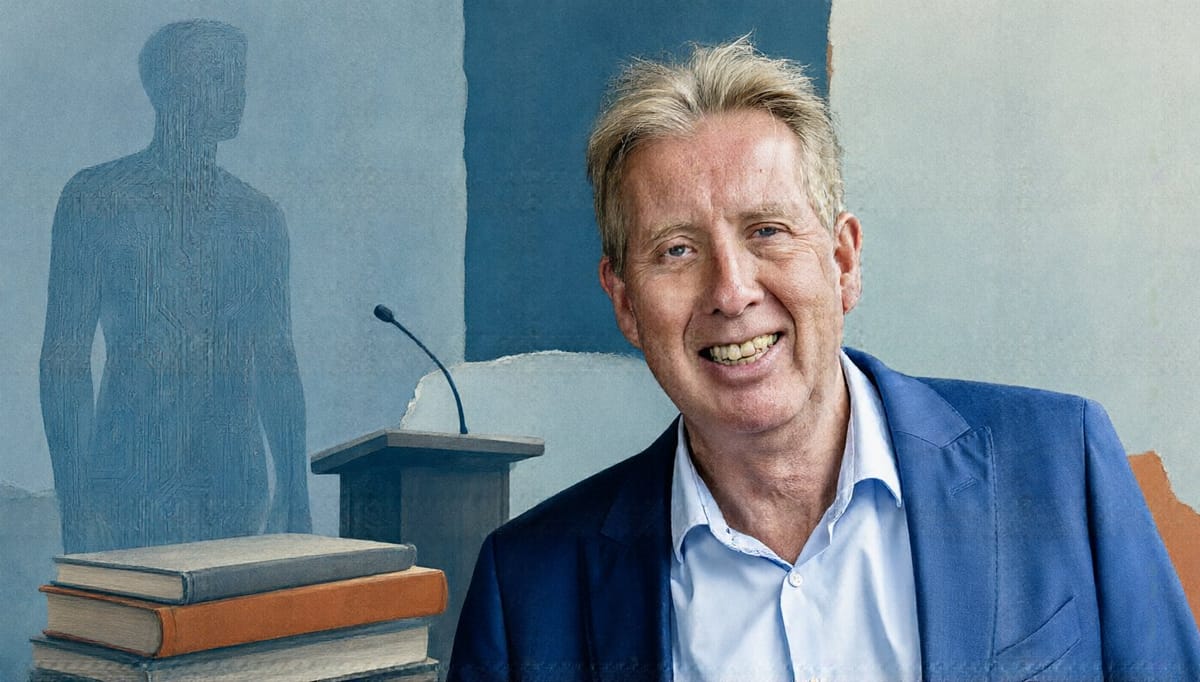
Why it matters: The twin should pass his knowledge about societal change on to future generations. The source notes there is also criticism.
The details:
- Rotmans says he is the first Dutch professor to have such a twin built.
- Studio The Synths is building the avatar. It earlier made a digital likeness of Ruud Gullit.
- The basis is his dozens of books, hundreds of scientific publications and his lectures.
- Last week his sound, image, voice and facial expressions were recorded, he told the NOS.
- The first version should be online before the end of the year. A hologram that can walk across a stage should follow later.
His health: Rotmans has had metastasised prostate cancer for almost two years. Doctors gave him five years in 2024. He says things are going well under the circumstances and that recent tests were encouraging.
Risks and safeguards:
- Rotmans says the avatar could give wrong answers, state views he does not hold or spread disinformation. He says it is being tested extensively to remove errors.
- He wants to judge new insights from the twin himself first. Afterwards he trusts others to do so, as with Wikipedia, where people correct each other.
- He says he is not afraid of misuse. He notes that climate deniers have already misused his work, and he accepts the risk.
- The twin is trained not to answer odd questions or topics he has nothing sensible to say about.
What they said: Rotmans says the twin is explicitly not meant as a personal replacement. He says his wife told him she would not sleep next to such an avatar. He hopes it will eventually surprise him, and he does not rule out that it will offer solutions he has not thought of.
The bottom line: Rotmans expects other scientists to follow soon and almost everyone to have a digital twin in 25 years. He says almost nobody is enthusiastic, which he sees as a good sign.