Scientists estimate 50,000 summer heat deaths in European cities
Scientists from Imperial College London and the London School of Hygiene & Tropical Medicine estimate about 50,000 extra deaths in European cities last summer, more than in the hot summers of 2022 and 2003.
The details:
- The team studied data on more than 850 urban areas in 30 European countries, home to about 40 percent of the population.
- For comparison, they estimated 29,000 extra deaths in 2022 and 28,000 in 2003.
- Summer was on average about 2.9 degrees Celsius warmer than the 1991-2020 average, especially in Western Europe.
- Italy, Spain and France recorded the most deaths. Germany and the United Kingdom were also hit hard.
Climate link: The researchers say 32,000 of the 50,000 deaths could be attributed to climate change. They compared measured temperatures with those expected without greenhouse gas emissions.
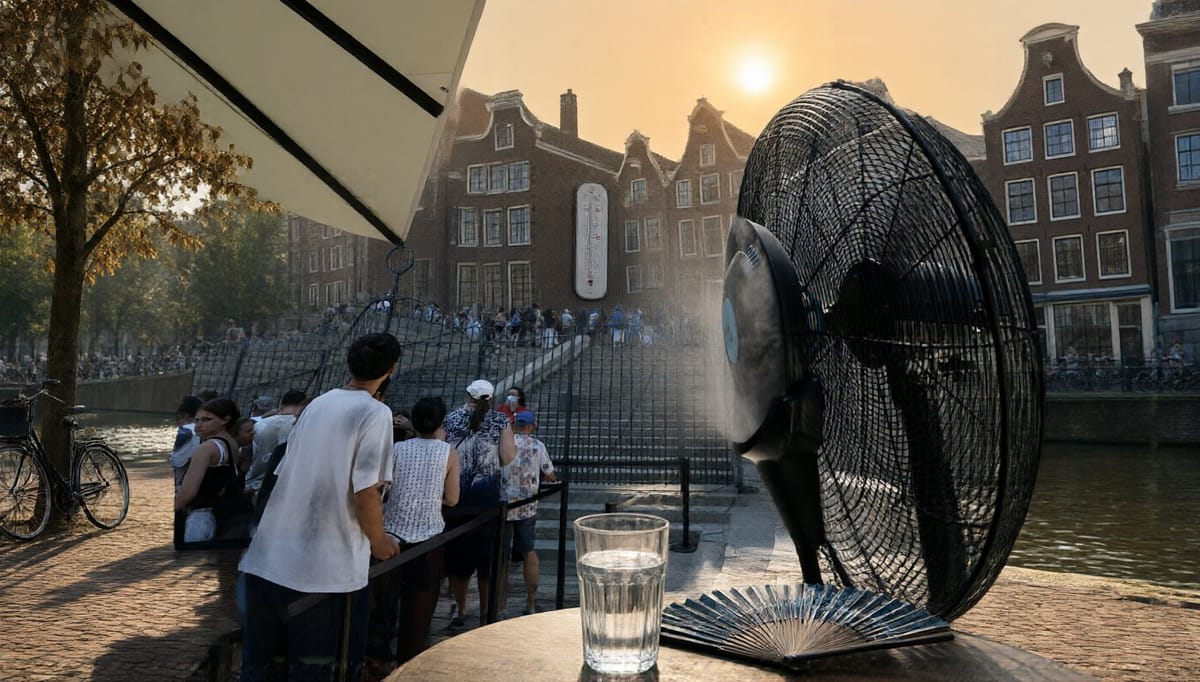
Netherlands: The late-June heatwave, when the Netherlands declared code red, was especially deadly. The researchers estimate a third of all deaths fell between 17 June and 1 July, when temperatures ran about 5 degrees above the 1991-2020 average.
- They estimate about 1,300 extra deaths in the Netherlands over the whole summer.
- The RIVM (Dutch public health institute) reported more than 900 extra deaths during the late June and early July heatwave.
- KNMI heat expert Carolina Pereira Marghidan, who was not involved in the study, said the figures match well despite different methods and time spans.
Younger people: Most victims were older people, but about 6,000 people under 65 also died. Researcher Garyfallos Konstantinoudis said more than 800 deaths were in the 20 to 44 age group, and young heat victims often have chronic conditions. Pereira Marghidan said many people do not realise heat also affects younger people.
Likely undercount: Researcher Malcom Mistry said heat deaths are underreported worldwide, so actual deaths are probably higher than 50,000.
What they said: The scientists warn that Europe must arm itself against heat. Researcher Pierre Masselot said it is increasingly clear that cities are not well adapted to rising heat.