Nearly 60% of Dutch municipalities now separate waste afterwards
Nearly 60% of Dutch municipalities separated waste after collection last year, up from a quarter in 2023, Statistics Netherlands (CBS) reports.
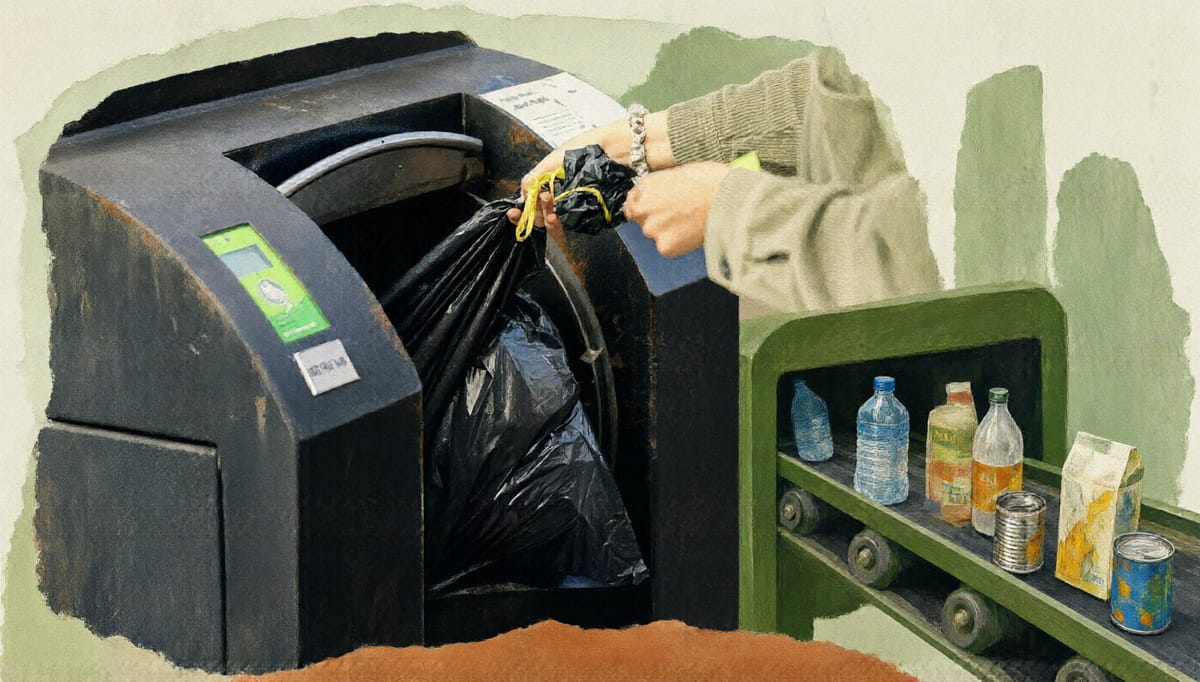
How it works: With post-collection separation (nascheiding), residents do not have to separate waste at home. Residual waste goes to an installation that does it for them.
Why municipalities switch: CBS says municipalities may choose nascheiding because it is cheaper or because residents do not separate their waste well enough.
By the numbers:
- The average Dutch person generated 444 kilos of household waste collected in 2025.
- Of that, 176 kilos was residual waste and 20 kilos was pmd (plastic packaging, metal packaging and drink cartons).
- Residual waste is about 40% of household waste.
- Residual waste per resident was the lowest since 1993, when measuring began.
Pmd collection: The number of municipalities collecting pmd separately has dropped slightly, CBS says.