More rabbits won't unlock the nitrogen deadlock everywhere
More rabbits in the dunes may help the Rotterdam port get nature permits again, but other areas are in too poor a state for the same fix, according to the article.
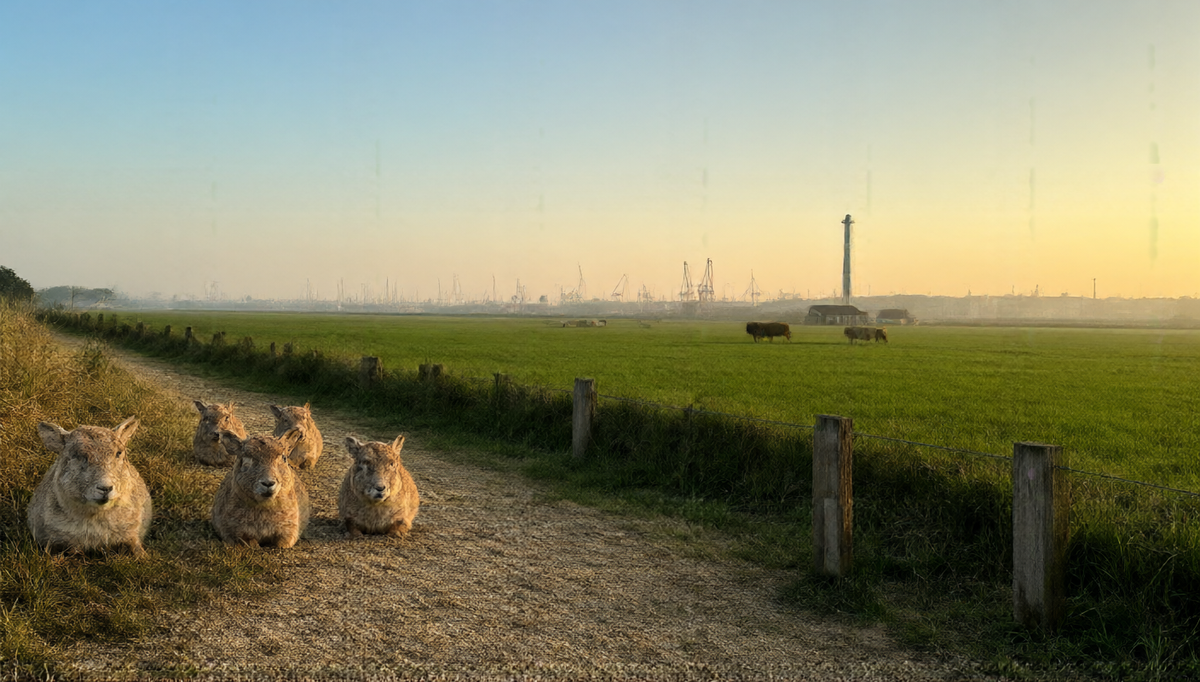
Driving the news: Last week's news that more rabbits could restore permits for the port angered many farmers. They ask why the same approach does not work for them.
The details:
- Rabbits alone are not the answer. Plants that do not belong must be removed, and measures against drying out are needed.
- The port's own nitrogen emissions must also fall further in the coming years.
- Ecologists found the four Natura 2000 areas near the port were doing better than thought.
- Permits only consider the four areas within 25 kilometres of the western part of the port. The Raad van State (Council of State) ruled three years ago that this limit is allowed.
By the numbers:
- Nationally, industry causes 3% of nitrogen deposition on nature. Agriculture causes 48%.
- The port accounts for about 13% in Voornes Duin, Meijendel and Berkheide.
- Too much nitrogen lands on 14% of Voornes Duin, expected to fall to 11% in 2030.
- In Meijendel and Berkheide, it is just under a quarter of the area, expected to fall to 14% in 2030.
- In the Nieuwkoopse Plassen, only 43% of the area is free of excess nitrogen. That is expected to stay the same in four years.
Zoom in: Nitrogen oxides from industry and traffic on protected nature have fallen for decades. The decline in ammonia, which comes from manure, has stalled for years. A Zuid-Holland provincial official said the current plans would not have been possible if the Nieuwkoopse Plassen lay next to the port.
Other areas: Almost the entire Veluwe receives too much nitrogen. The same applies to the Drents-Friese Wold, the Dwingelderveld and the Peel. In these areas, simple measures such as more rabbits are not enough.
What can be learned: The port looks at nature as a whole, including drying out and exotic plants. Agriculture minister Jaimi van Essen plans to restore nature more broadly, not only through nitrogen.
What is next: It is not yet certain that permits can be issued, as any court cases still need a ruling. Zuid-Holland deputy Robert Tieman said the province has very good cards. Deputy Arne Weverling said the future must show whether the plan is legally watertight.