Groningen professor says Dutch football law is world's strictest
The Netherlands has the strictest football law in the world, says Jan Brouwer, professor of Law and Society at the University of Groningen.
Driving the news: Brouwer spoke on the radio programme Langs de Lijn En Omstreken last Sunday, according to NOS. He said weak legislation is not the reason fans stop matches with fireworks or hold up their own team's bus.
By the numbers:
- Brouwer has worked on football vandalism for thirty years.
- He says Dutch hooligans can be punished up to ten times more heavily than in England.
- England has had a special football police unit of about one hundred people since 1949, he says.
What they said:
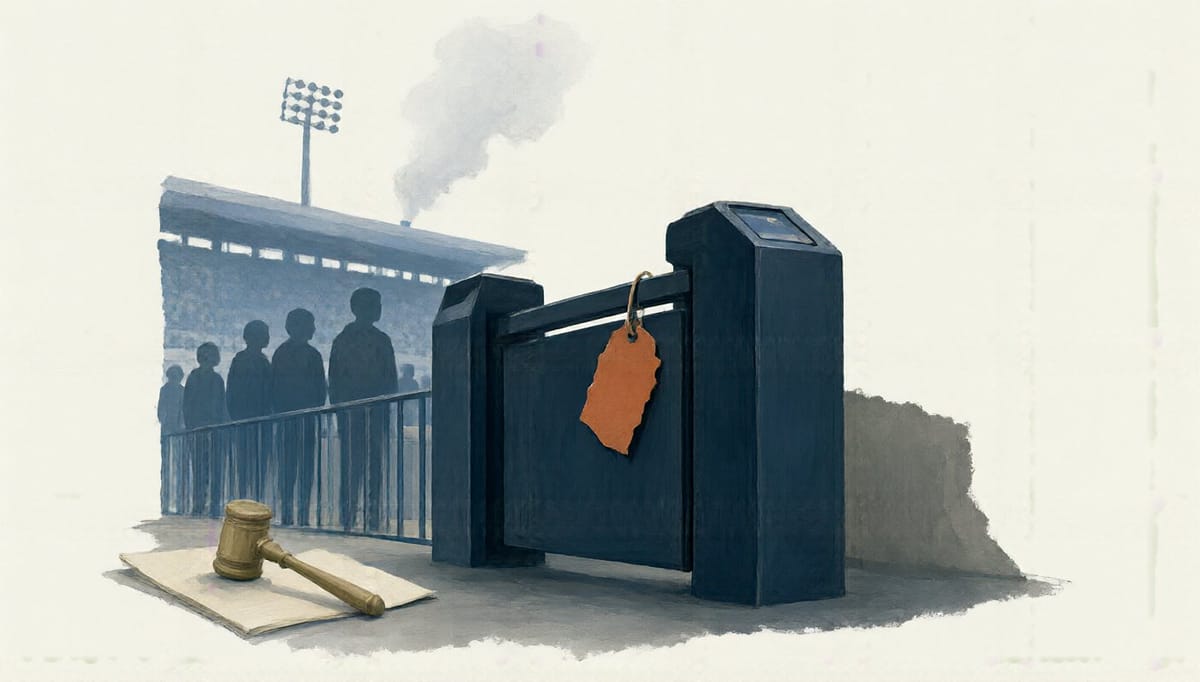
- England's Hooligan Act moved the system from criminal to civil law in the late 1980s, Brouwer said. Stadium bans there come from a civil judge, because the burden of proof is lower.
- The Netherlands copied that approach but punishes harder, he said. It can also issue fines, which England cannot.
- Brouwer says the Netherlands is the only country where fans with a stadium ban must report in person. In England, he said, banned fans only hand in their passport for matches on the European mainland.
Recent incidents:
- The Eredivisie match Cambuur-Go Ahead Eagles was abandoned for good last month, after fireworks were set off twice in the away section.
- Two weeks ago, Vitesse-De Graafschap in the Eerste Divisie did not go ahead. De Graafschap fans, barred from Arnhem, blocked their own team's bus.
- sc Heerenveen-NEC started late at the end of October because of fireworks in the away section.
Why England looks better: Brouwer says England and other countries have a tacit agreement with the press to report little, so hooligans do not enjoy their finest hour.
Outlook and fixes: Brouwer does not expect football vandalism to vanish soon. He says emotions take over whatever the penalty, and young fans trying to prove themselves renew the groups, as he said happened after the coronacrisis.
He suggests a dedicated football police unit. Police told him they lack the capacity, he said, and that politicians would need to free up money.
Brouwer also says searches at Dutch grounds are often done by well-meaning volunteers with little or no training. In England, he said, trained staff do them.
He has long urged the KNVB (Dutch football association) to explain better how fans can be caught and how heavy the penalties are.