Cabinet proposes equal rules for newborns' surnames
The Dutch cabinet has put a bill on children's surnames out for consultation, aiming to treat both parents equally when a newborn's surname is set.
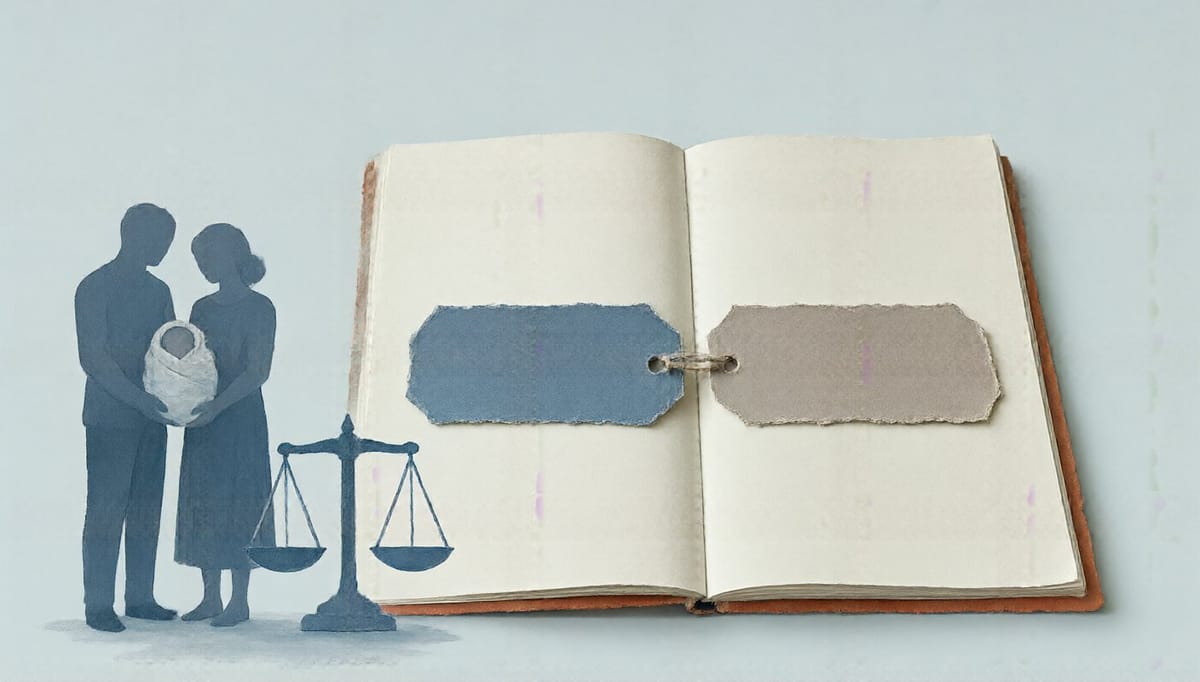
Why it matters: The cabinet wants an equal arrangement for both parents. The rules would apply in the European Netherlands and in Bonaire, Sint-Eustatius and Saba (Caribbean Netherlands).
What changes:
- Parents can choose a surname together before or at the birth registration of their first child.
- Without a choice, or if it is not registered with the municipality on time, the law decides the name.
- Today the default is the father's surname for married parents of different sexes, and the mother's surname for unmarried parents.
- Under the bill, the default becomes a sex-neutral rule: the child gets both parents' surnames in alphabetical order.
Easier process: Both parents would no longer need to appear at the municipal desk. The person registering the birth can state the parents' choice. A consent form could also record it, similar to consent for recognition of a child.
Second chances:
- Parents could jointly choose a different surname within a year of the birth.
- They could also bring disputes about the surname to a judge in that period.
- If parents disagree, the child gets both surnames in alphabetical order by default. The judge can deviate if that is not in the child's interest.
- The government gives examples: a contentious divorce, or a mother who is a victim of coercive control or domestic violence by the father.
What is next: Anyone can respond until 10 January 2027. The responses will be used to improve the bill before it goes to the Raad van State (Council of State) for advice and then to the Tweede Kamer (House of Representatives).