Cabinet keeps funding stop for undocumented migrant shelter
The Dutch cabinet is sticking to its decision to stop funding the Landelijke Vreemdelingenvoorziening (LVV), the national shelter scheme for undocumented migrants, a Raad van State (Council of State) hearing showed today.
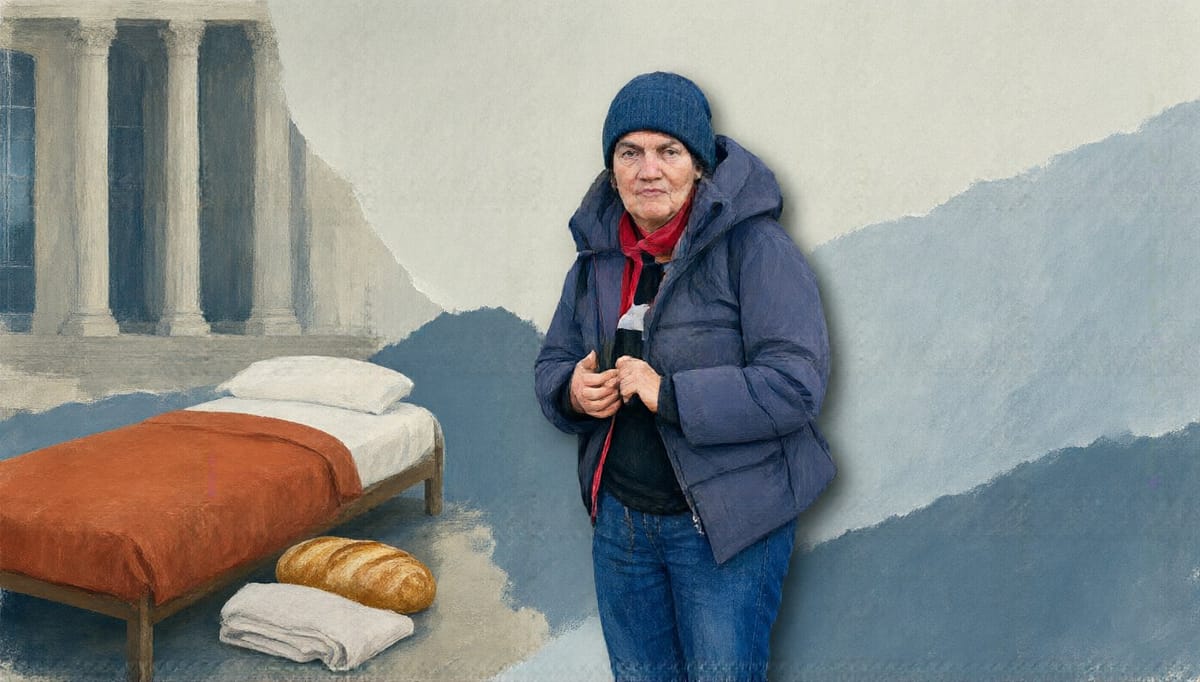
The background: Through the LVV, foreigners with no right to stay in the Netherlands get housing, food, washing facilities and living allowance. It is also known as the bed-bad-brood scheme. About 600 people are estimated to use it.
- Since 2019, five cities have run 24-hour shelter: Amsterdam, Rotterdam, Groningen, Eindhoven and Utrecht.
- Then-minister Faber (PVV) ended the funding as of 1 January 2025, favouring return to the country of origin over subsidised shelter.
- Since then, cities often pay for the shelter themselves, supported by aid organisations.
What the courts said: The Amsterdam court ruled in May 2025 that 28 undocumented people had made it plausible they cannot provide for themselves. According to the court, ending shelter puts them at great risk of inhuman or degrading treatment. The Rotterdam court later reached a similar view in a case brought by sixteen people.
The arguments: Lawyers for undocumented people, municipalities and aid groups told the Raad van State that the minister violates the European Convention on Human Rights (EVRM) by offering no shelter.
- The state's lawyer, defending asylum minister Van den Brink (CDA), disagrees. He says the government does provide shelter in the restricted-freedom location (VBL) in Ter Apel, if people cooperate with a return procedure.
- The state's lawyer also said all parties knew the LVV would end at some point, and that registering in Ter Apel is the migrants' own responsibility.
Ter Apel: The VBL has 232 places and cannot be expanded in the short term. Several parties say it has too little space and is unsuitable for this group. They note that undocumented people formally have no country to return to, and that the two types of shelter existed side by side for years.
Who is affected: Lawyer Jelle Klaas said the group numbers a few hundred, often with serious problems. He said some are stateless, for example from the former Soviet Union or Myanmar, or from a war zone. Municipalities and aid groups have warned for years that vulnerable people will end up on the street.
What is next: The Raad van State is expected to rule in six weeks at the earliest, but the court said at the end of the hearing that it will probably take considerably longer.